
The Buildings with a Past Make the Best Hosts
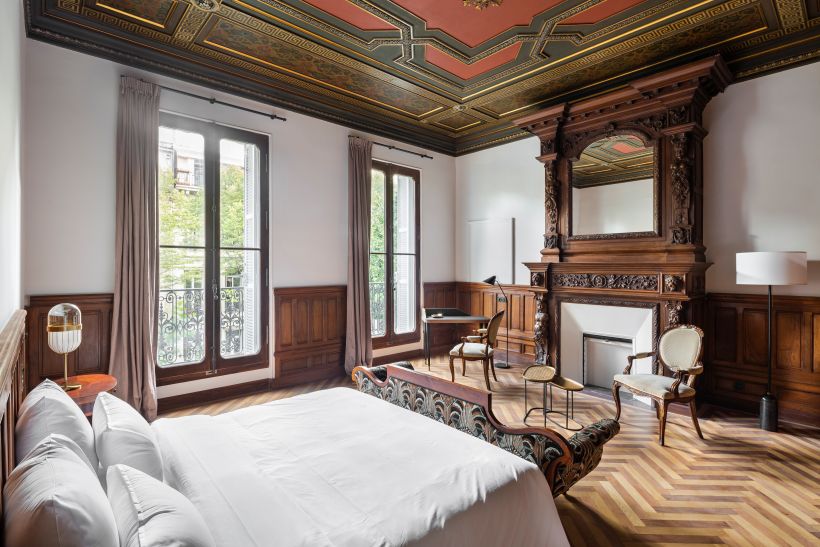
You stare up at the ceiling after landing on your perfectly plump bed at the hotel you’re staying in this weekend to explore Milan, Berlin or Porto.
From the pretty edges of the picture rail to the original gold-flecked ceiling art and chandeliers to the cornices, paneling and statement fireplace, there’s a part of you that doesn’t want to leave, and you’re beyond glad that you chose this place over the chain you’d normally go for.
They’re calling it the death of the ‘anywhere hotel’, with guests now demanding culturally and physically rooted design.
Last year, over 90% of luxury travelers wanted to integrate history into their trips, and searches for hotels in upcycled historic architecture continue to rise year on year, revealing a shift in guests’ appetites.
The explosion in demand for unique accommodation has spread to converted schools, banks, monasteries, castles, and courthouses.
Take the Hôtel-Dieu Lyon, a former hospital now open for luxury stays or The Bodmin Jail Hotel in Cornwall, built in an 18th century prison which offers a prisoner experience package or a slice of opulence.
Psychology of the guests
Somewhere with a restorative spirit that embraces specific craft traditions – whether that’s hand-carved staircases, timber beams, parquet or stained glass windows – immediately signals a sense of luxury to guests.
For investors, developers and architects, keeping that heritage at the heart of the project, and treating it as a design discipline rather than a compliance constraint, is essential.
Luxury hospitality is moving away from replicable design and toward unrepeatable buildings. Conversions are inherently un-cloneable, which can pose a challenge for the teams behind these projects, but also gives them an incredible competitive edge against big new-build chains.
Retrofitting also speaks to the mindset of the modern luxury traveler, who increasingly wants to feel responsible in how they travel. Conversions offer a genuinely sustainable option, with a far lower carbon impact than building from new.
Adding a commercial lens
With boutique experience-led accommodation leading the way, it is no doubt that investors’ hunger for retrofitting is here to stay indefinitely.
Investors want property that offers resilient operations, that complies with carbon and energy regulations, and can offer varied income sources, while presenting a piece of history and relevance in fast-paced European cities.
Offices are the obvious retrofit candidate; their generous floorplates, glazing and reuseable infrastructure can convert easily into hotel rooms.
For comparison, take a prison conversion, which has highly cellular, restrictive layouts with minimal natural light, or a church with irregular window placement and large uninterrupted spaces that don’t subdivide well into individual rooms.
With more than 3 million sq ft of office space reportedly acquired for potential hotel conversion in the past two years in London alone, the evolving trend to transform high-grade commercial building stock continues to grow at speed.
Surplus office space is unlocking a significant pipeline for new hotel development across Europe. Existing structures provide scale, location, and infrastructure that new builds struggle to replicate.
When done well, conversions offer faster delivery, lower upfront cost, and reduced carbon impact compared with starting from scratch.
Heritage has a price
Despite the value offices offer hotel development, Europe’s building stock is much older and narrower than cities in the US or Asia.
Pre-war commercial buildings and midcentury blocks with daylight-filled perimeter offices bring huge character, but uneven ceiling heights and inconsistent structural grids can make integrating air conditioning, electrical and plumbing genuinely difficult.
Retrofitting new MEP without damaging or obscuring original features is one of the toughest parts of the job. However, it can be achieved with a conservation-minded architect who routes services through non-original voids and later additions rather than through protected parts of the building.
The same principle applies to considering back-of-house space from the outset. Without laundry services, loading docks, housekeeping storage, and staff routes, you don’t have a hotel – which is why the operational spine of your hotel must be designed first.
A guest may never notice a badly planned back-of-house, but the operator and staff will feel it.
Heritage-first design in practice
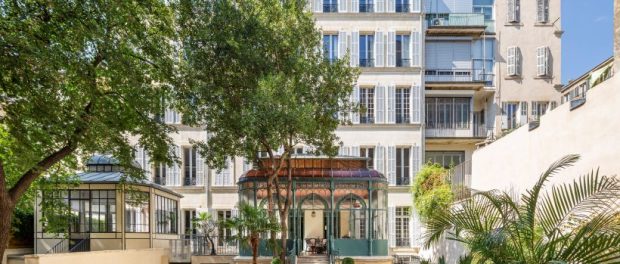
A 19th century mansion in the heart of Marseille, originally built in 1860 and enriched with neo-renaissance detail, served as offices for much of its later life before its transformation into a 51-room hospitality venue.
The goal was to fit a modern hotel program into this historic building while safeguarding its value. Most of the mentioned challenges were faced and tackled head on through prioritisation of innovative space-making, ESG compliance and embracing the complexities of converting impressive heritage structures.
From building the logistics hub under the courtyard to lab testing the historic ceilings for fire safety, and protecting features such as the original cornices, balustrades and wall paintings, the building was turned from a historic liability into a long-term, beautiful, income-generating hotel.
Some developers and architects may see heritage features as a limitation or frustration, but the best and most memorable retrofits are those that have weaved or amplified them within the structure.
Take an office building in central Berlin which was originally built in 1930, and is soon to become a 144-room hotel retrofit. The project goal is to maintain the balance of keeping classic architectural features, while also ensuring modern efficiency.
In particular, the recently redesigned facade respected the original 1930s ribbon windows while also incorporating high-performance insulation and ventilated cladding to meet Germany’s Building Energy Act (GEG) standards.
The guest experience is often shaped by the buildings we stay in, and small nods to a building’s past provide the type of character visitors want to experience as part of their trip.
One significantly challenging but incredible transformation came from the conversion of a former bank within a highly constrained heritage environment in Rome. Here, technical problem-solving, regulatory navigation, and adaptive reuse transformed the building into an 83-room lifestyle hotel.
These examples reinforce that heritage features need not be an obstacle to modern hospitality standards. With the right approach, they become the very things that set a building apart, offering guests a sense of place that’s very clearly in demand.
Beyond the trend
Heritage hotels offer a competitive edge that new-build chains simply cannot replicate, but that edge must be earned. As Marseille, Berlin and Rome show, the buildings that succeed are the ones where heritage is treated as a design discipline from day one and where back-of-house planning gets the same early attention as guest-facing spaces.
It’s also worth being realistic about the moment we’re in. Experience-led travel is having a cultural moment, which like most trends might not last forever. The narrative of exclusivity that’s driving demand today won’t sustain itself on novelty alone. Those who will succeed are the operators who keep raising the bar on authenticity and craft, but who are also commercially and operationally focused.
With millions of square feet of office stock coming onto the market across Europe’s cities, the pipeline for conversion is only growing. But the returns won’t come from the buildings alone. They’ll come from the teams behind them: architects and developers who pair a genuine respect for heritage with commercial intelligence to make these buildings work as hotels and not just look like one.
