
Why Barcelona Is One of Europe’s Most Exciting Culinary Destinations Right Now
Barcelona has always been famed for its Gaudí architecture and picturesque coastline, but in recent years, the culinary scene has cemented the city’s reputation among discerning travellers. In 2024, Barcelona’s fine dining jewel, Disfrutar, claimed the top position on the list of the World’s 50 Best Restaurants, and at the time of writing, the Spanish city has 29 Michelin-starred restaurants.
The culinary offerings by no means stop there. The city is also home to an array of markets, wine bars, and bodegas that shape local cuisine. You don’t always need to vie with other tourists to taste the best of Barcelona. Some of the most unusual bites can be found in its quietest neighbourhoods. It’s that sense of discovery, the feeling that you can round a cobbled corner and find yourself at the city’s best-kept secret, that is part of what has made the Catalan capital such a draw for culinary enthusiasts.
How Barcelona Blends Traditional Catalan Cuisine with Modern Gastronomy
Inherited culinary knowledge matters deeply in this region, but Barcelona’s chefs and restaurants have made sure to play with the Catalan classics even as they preserve them. The same push and pull defines the city’s casual eating, mapped out in a guide to Barcelona’s street food that runs from market stalls to hole-in-the-wall counters across the old town. Tapas bar menus are filled with old and new interpretations of Catalan cuisine. Classic, rustic dishes like pa amb tomàquet and escalivada feature widely, as do newer additions that bring in Mexican, Peruvian, and even Japanese flavours.
Heritage and modern gastronomy sit side-by-side in Barcelona. Sometimes, it’s on the same plate. You see this at the Michelin-starred restaurants such as Cocina Hermanos Torres, where recipes passed down through generations are re-imagined as gourmet meals. Even the more traditionally-focused establishments, such as La Pubilla, are in no way stultified by heritage. Every dish holds a strong sense of Catalan identity and yet still maintains a sense of modernity.
This blend often comes down to the basic tenets of Catalan cooking: freshness, seasonality, and simplicity. By maintaining that foundation, even as they experiment, Barcelona’s restaurants have managed to find a balance between the old and the new.
The Seasonal Ingredients That Keep Barcelona’s Food Scene Fresh
The quality of Barcelona’s food scene is largely shaped by the quality ingredients that the city’s chefs have access to. First, there’s the Mediterranean coastline, which, at different times of the year, is abundant with mussels, anchovies, sardines, and clams. The seafood is fresh enough that it’s usually dressed with little more than local olive oil and salt.
Barcelona is also surrounded by agriculture. There are wineries less than an hour from the city, nearby farms that produce cheeses and prized hams, and growers that focus on local specialities such as eggplants and sweet red peppers. In autumn, wild mushrooms foraged in the Catalan forests are a restaurant favourite, and in winter and early spring, look out for local artichokes. Some restaurants alter their menus entirely to focus on these seasonal ingredients as they appear.
The readiness of Barcelona’s chefs to embrace seasonality ensures that menus always feel fresh and rooted in the abundance of the moment. Each month of the year offers new produce and new culinary experiences.
How to Experience Barcelona’s Culinary Scene Beyond the Tourist Hotspots
Barcelona’s increased popularity has meant that certain parts of the city are frequently overrun with tourists. It also meant that many restaurants are now booked out months in advance. Barcelona’s connection between food, drink, and social life extends beyond restaurants and into the city’s celebrations. Event culture reveals just how deeply gastronomy is woven into everyday experiences, with food and drink spending outweighing venue costs by almost four to one – one of the widest gaps seen anywhere in Europe. The city’s approach to celebrations shows that cuisine is not simply an accompaniment but often the centrepiece itself, with the data behind Barcelona’s celebration culture offering further insight into how food shapes the city’s social occasions.
Here are a few ways to eat well away from the crowds, whilst still getting a taste of the cuisine that has made this such a sought-after destination:
Markets
La Boqueria is Barcelona’s most iconic market and worth visiting for its sheer scale, though some locals have complained that it’s lost its foodie edge. Food markets in general are a significant part of Barcelona’s food culture, especially as the city seeks to improve sustainability.
Mercat del Ninot and Mercat de Sant Antoni have both been renovated in recent years and offer a quieter look into Barcelona’s culinary scene. They combine fresh produce with curated stalls selling local cheeses, olive oils, and artisan breads.
Bodegas and Wine Bars
Some of the bodegas of Barcelona have barely changed their décor in decades and are easy to miss if you don’t know the treasures an old wine barrel and a peeling sign can signify. Others have updated to feel more like modern wine bars. What these establishments share is an appreciation for the side of Barcelona’s culinary scene that delights in local vermouths and wines.
Your drink order is just as important as your food order at these spots. A plate of anchovies is made all the more interesting by the right glass of vermouth, and cava gets new life as the perfect charcuterie accompaniment.
Quieter Neighbourhoods
The kinds of establishments that travellers dine at aren’t always as important as the neighbourhoods they choose. The more residential areas such as Gràcia, Horta-Guinardó and Les Corts may not be as lively as the Gothic Quarter, but they have much to offer in the way of culinary experiences. All of these neighbourhoods lean more toward local clientele and still have a range of both Michelin-starred and Michelin-listed restaurants, as well as more low-key bodegas and tapas bars.
Barcelona’s Food Scene is About The People
Barcelona’s food scene is brimming with talented chefs, unique, seasonal ingredients, and a sense of heritage that somehow still embraces modernity. These aspects have helped make it one of Europe’s most exciting culinary destinations, but it’s not the first thing you notice as a traveller. The first thing many comment on is how social the dining culture is in Barcelona.
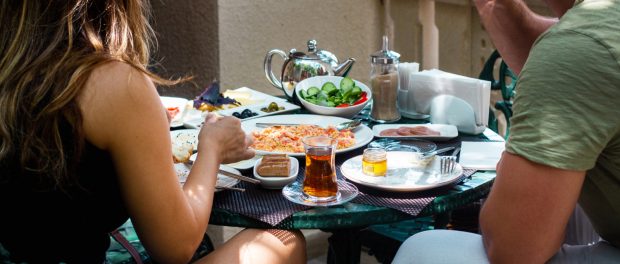
Meals run long and late. Spaces are lively. Plates are often shared, and it’s not uncommon for strangers to strike up a conversation. Perhaps this is the true luxury of Barcelona’s food scene and why it’s become such a beloved destination. It’s not just the cuisine that is exciting, but the people and stories that it brings together around a table.
